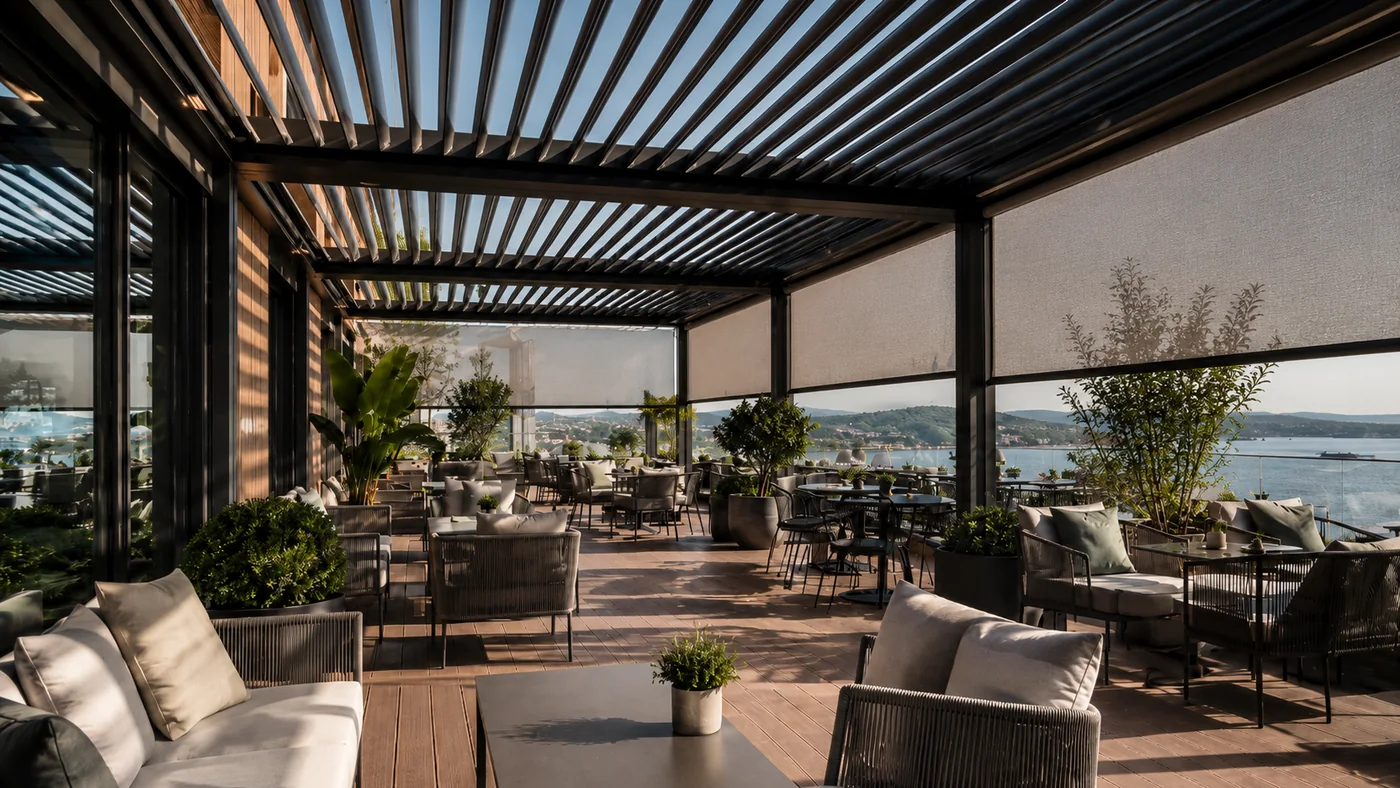
What is Zip Screen Systems for Outdoor Spaces and why is it applied?
Zip Screen Systems for Outdoor Spaces is a professional building and shading solution used to improve comfort, add architectural value and strengthen the function of outdoor or semi-outdoor spaces.
Why should Zip Screen Systems for Outdoor Spaces be planned professionally?
Incorrect measurements, unsuitable material selection or weak installation planning may cause usage problems. Therefore, survey, measurement, material selection and application should be managed as one complete process.
Proper planning
Before application, the current condition, dimensions and intended use of the area are evaluated together.
Suitable system selection
Material, mechanism and installation details are selected according to the project requirements.
Application areas
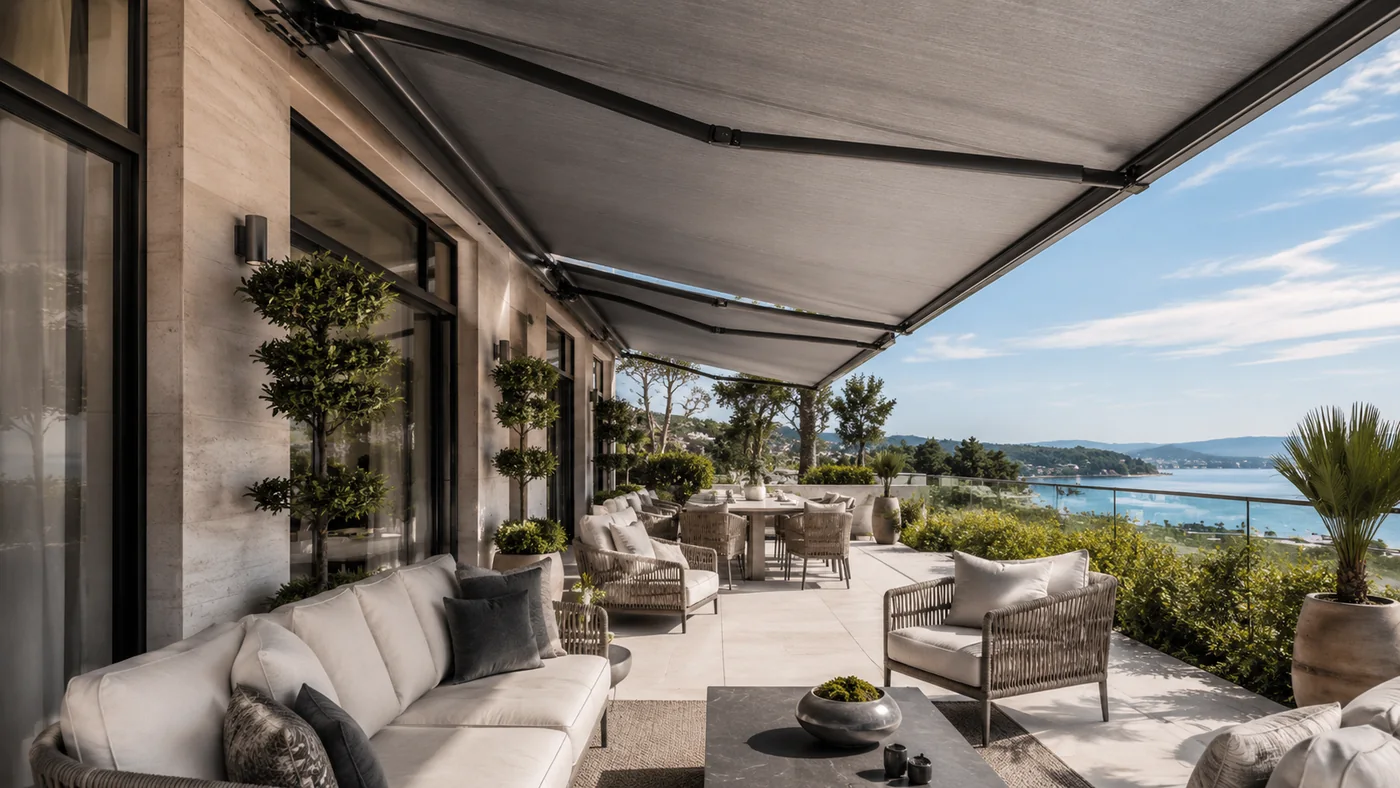
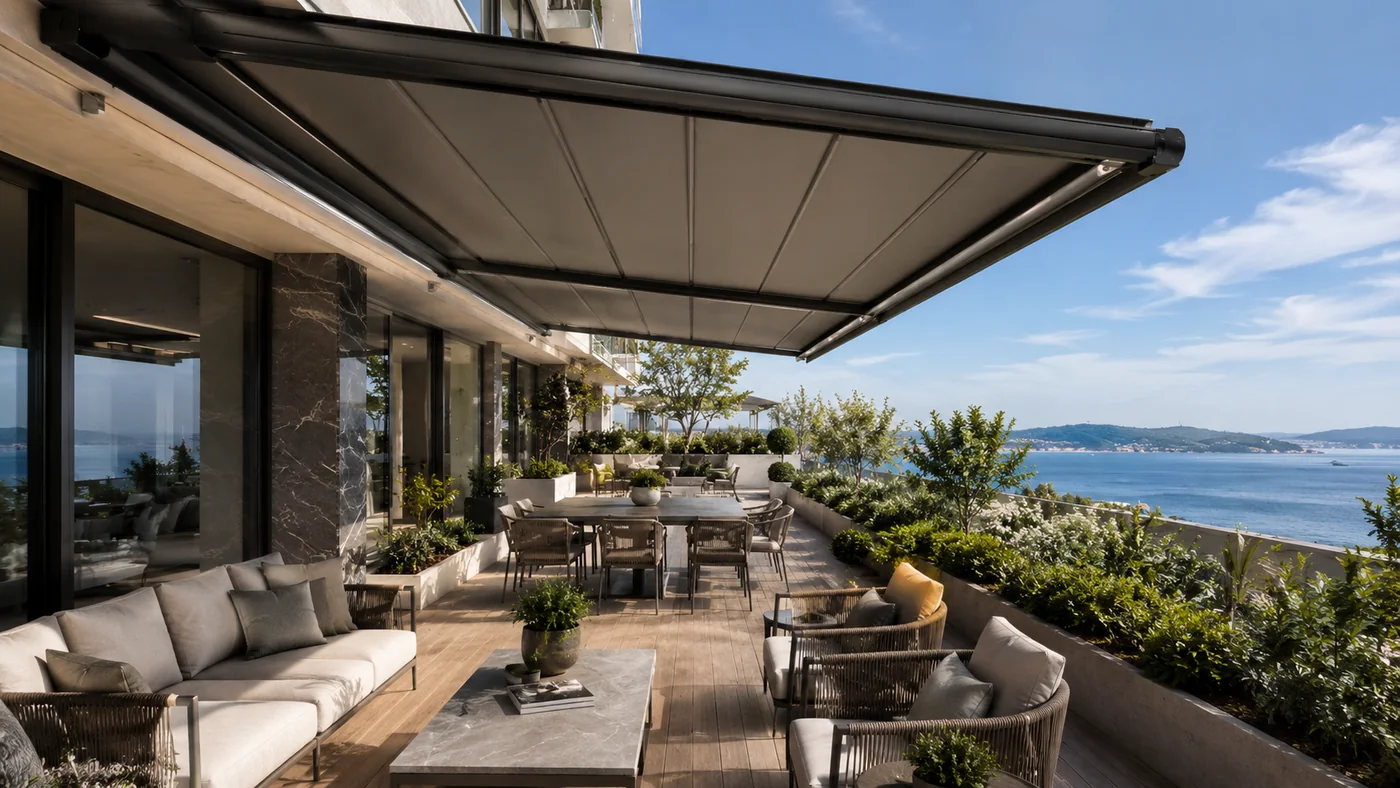
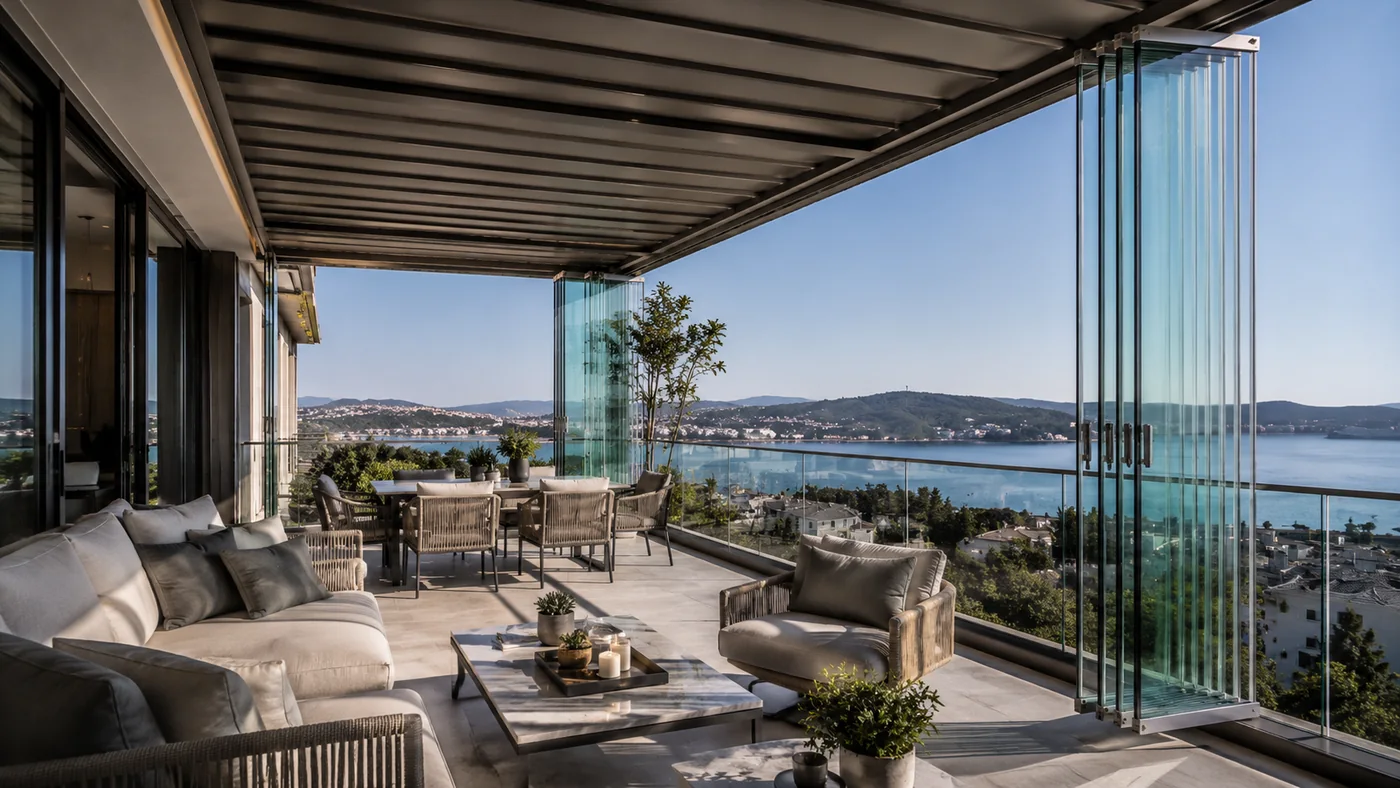
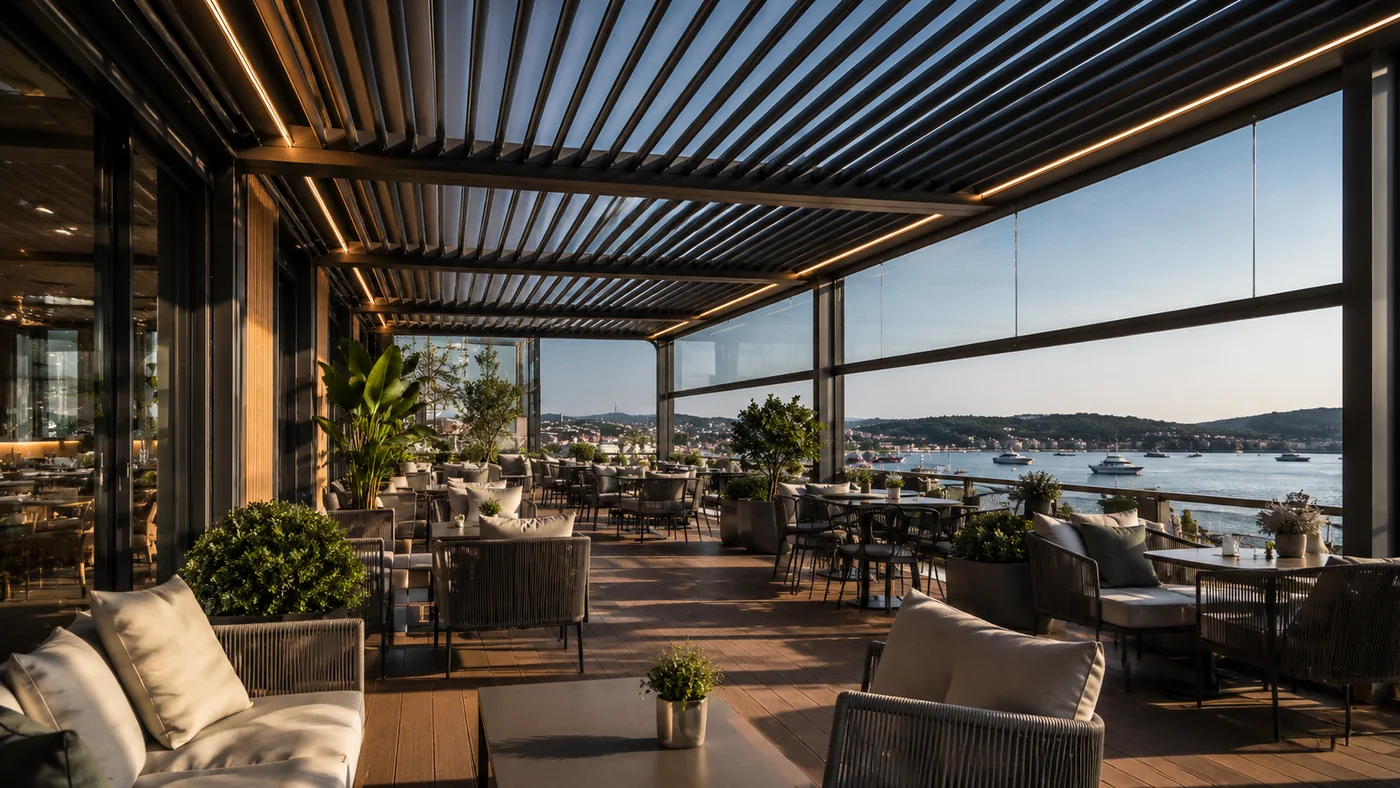
Zip Screen Systems for Outdoor Spaces is planned specifically for the project, considering site dimensions, architectural expectations and intended use.
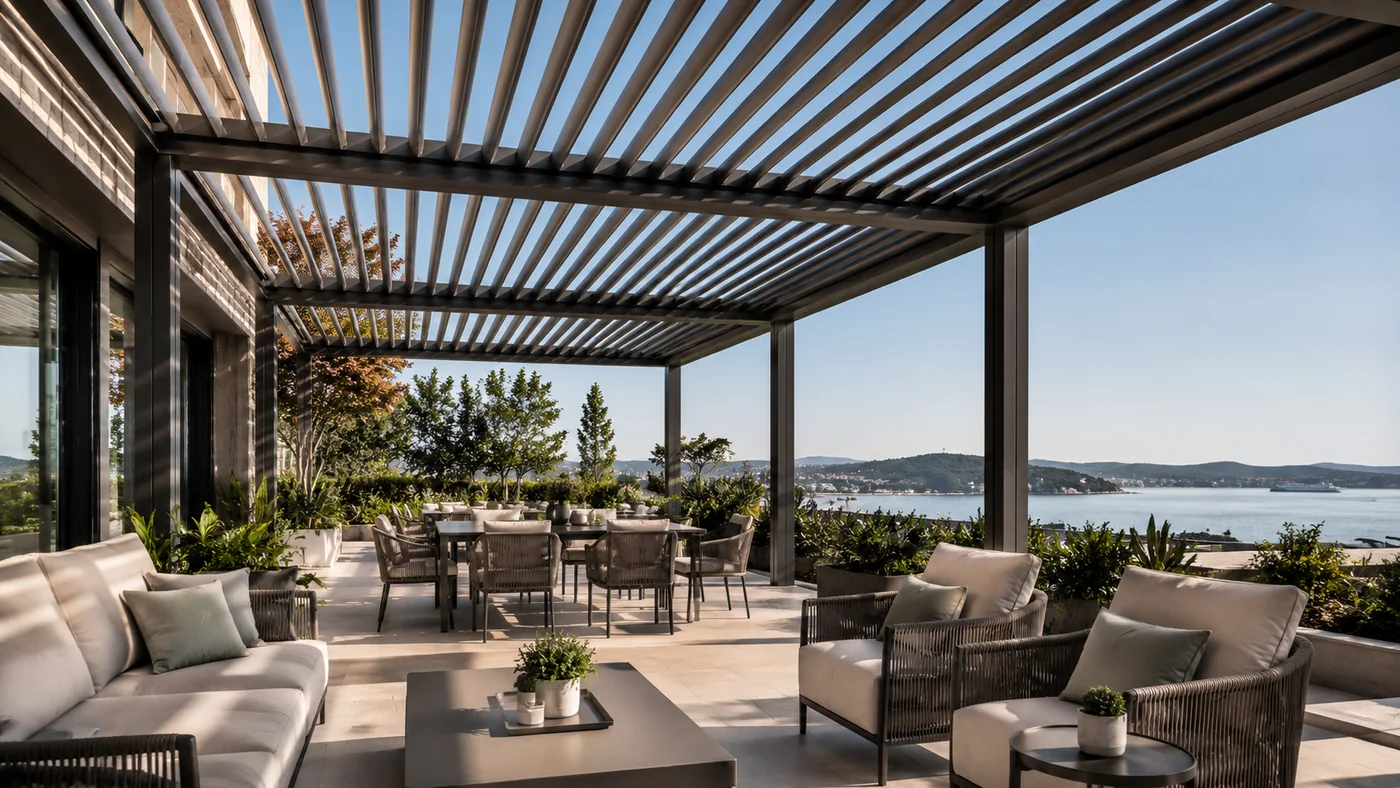
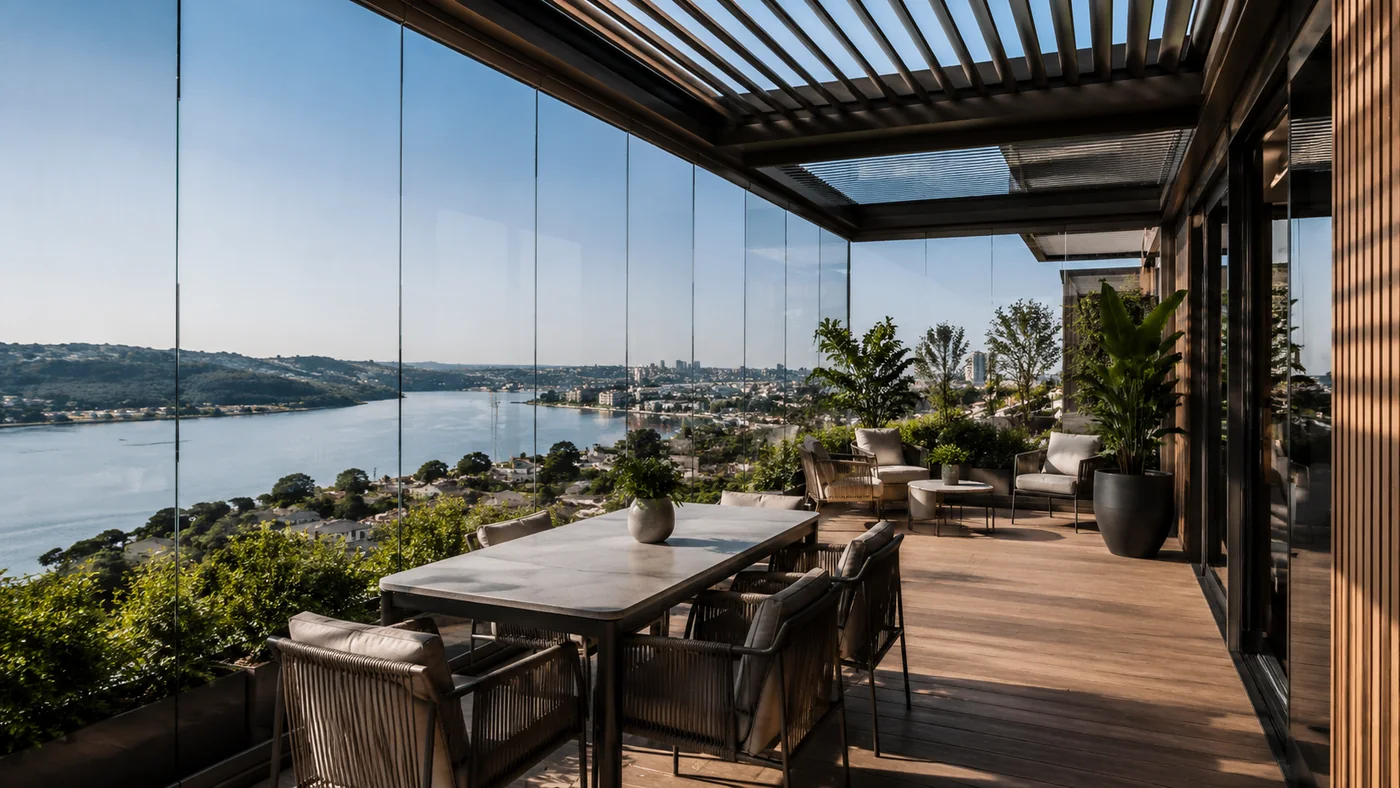
- Villa, terrace and balcony areas
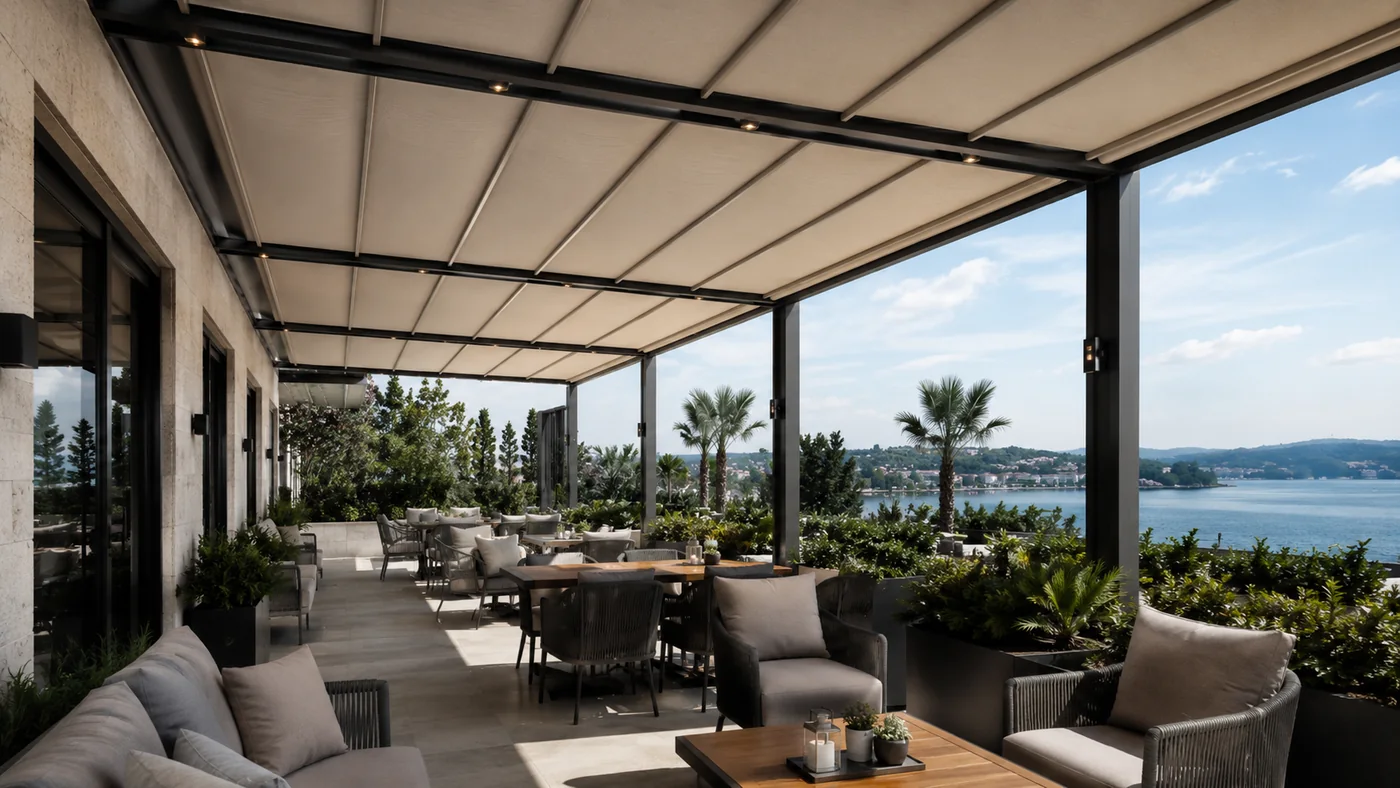
- Cafe, restaurant and hotel outdoor spaces
- Garden, veranda and social areas
- Corporate building and facade applications
- Renovation and modernization projects
- Architectural applications requiring custom dimensions
Value added to the project
Our technical approach
- Site dimensions and existing structure are reviewed.
- Suitable system, material and accessory options are determined.
- Installation details and usage scenario are planned.
- Final checks are completed before delivery.
A tailored solution planned around dimensions and architectural expectations.
Zip Screen Systems for Outdoor Spaces: Selection, installation and maintenance criteria
When comparing proposals for this system, appearance alone is not sufficient; site conditions, mechanisms, connections and long-term operation should be assessed together.
Space and use
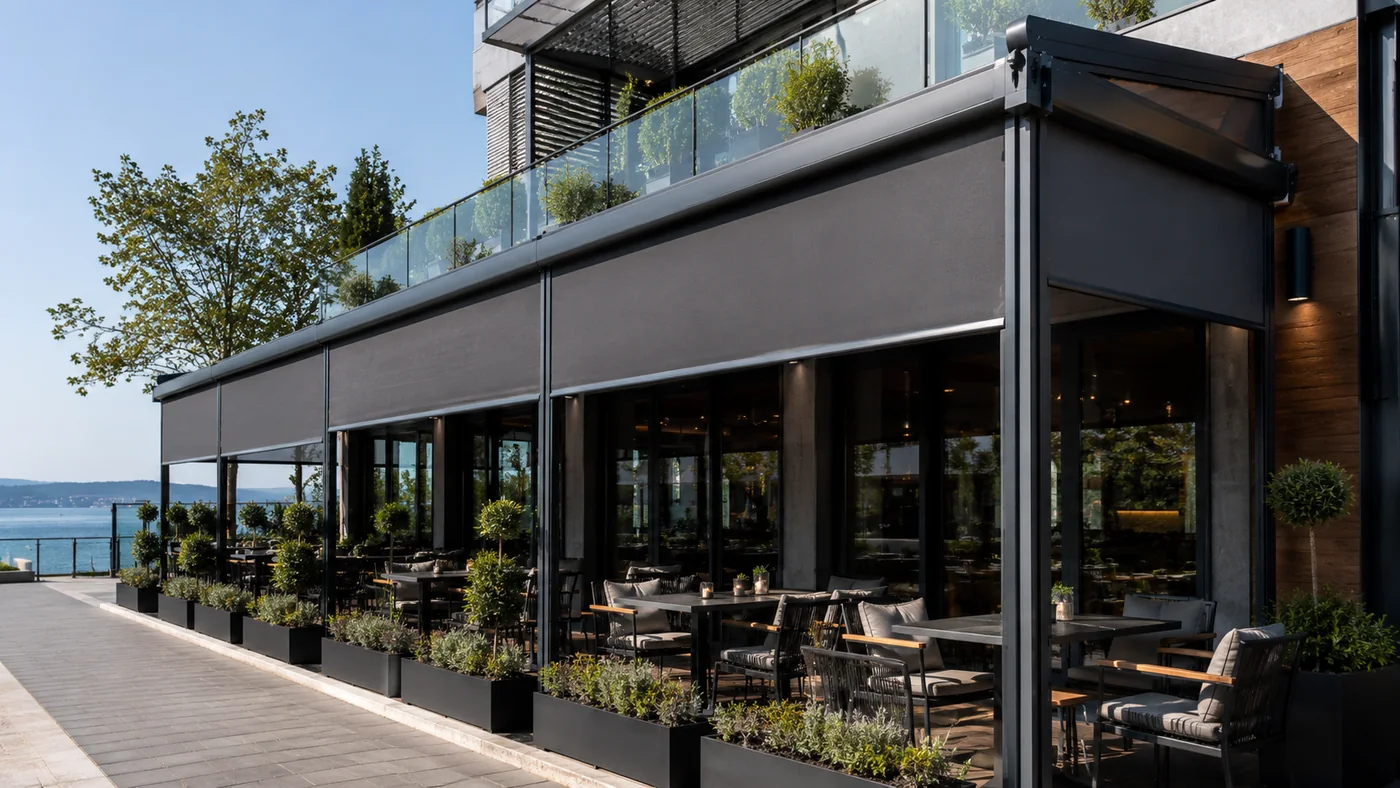
Opening size, wind exposure, solar direction, view requirements and fabric openness should determine the zip-screen configuration.
Technical planning
Parallel side guides, movement of zipped edges in the track, bottom-bar balance, motor and sensor options should be adjusted together.
Maintenance and safe operation
Clean guides, monitoring of folds or tears and correct operation during severe weather are important for reliability.
Final profile, glass, fabric, motor, anchoring and dimensional decisions should follow a site survey, applicable structural requirements and verified manufacturer data.